A few months ago, my son made a simple commitment: run at least 1KM every day. No matter how busy he was, rain or shine, he showed up and ran.
At first, it seemed like a small commitment. But as the days passed, something remarkable happened. His pace and stamina improved over time. He increased his running distance on good days. And he looked forward to every run.
I soon realized that he wasn’t just ‘trying’ to run every day; he was becoming a runner.
This got me thinking: What if we approached our spiritual life the same way?
Most of us start the year with big spiritual goals—to pray daily, read the entire Bible, or wake up earlier for devotion. But by March, those commitments start to fade.
That’s where Atomic Habits by James Clear comes in. It’s one of the most practical books I’ve read on building small but powerful habits that lead to lasting change. And as a busy Christian, I’ve found that using Shortform—a book summary platform—has helped me stay consistent in learning and growing without feeling overwhelmed.

In this post, I’ll share:
✔️ How Atomic Habits applies to our Christian walk
✔️ A critical reflection on where it aligns (or conflicts) with biblical teachings
✔️ Practical ways to build godly habits based on my personal experience
✔️ How Shortform has helped me absorb and apply these lessons
If you’ve ever struggled with staying disciplined in your faith—whether it’s Bible reading, prayer, or spiritual growth—then this is for you.
Why Talk About Habits Now?
We’re a few months into 2025, and if you’re like many believers I’ve talked to, those New Year resolutions about spiritual growth might be starting to fade.
Maybe you started strong with daily Bible reading, but work got busy. Perhaps that prayer journal is gathering dust, or small group attendance is becoming sporadic.
Here’s the thing: March is actually the perfect time to build lasting spiritual habits.
Why? Because we’re past the hype of resolutions, and we can now focus on sustainable, long-term habits instead of short-lived bursts of motivation.
As Ecclesiastes 3:1 reminds us, there is a season for everything – and sometimes the season for real change comes after the initial excitement has worn off.
“There is a time for everything, and a season for every activity under the heavens.” – Ecclesiastes 3:1
This is where Atomic Habits offers invaluable insights that we can apply to our faith journey. As someone living and working in urban Asian context, I’ve found this book particularly relevant for busy Christian young adults trying to navigate their faith amidst demanding careers and city life.
Why This Book Matters for Christians
While Atomic Habits isn’t explicitly a Christian book, many of its principles align with biblical wisdom about stewardship, discipline, and growth.
Paul talks about training ourselves for godliness in 1 Timothy 4:7, and James Clear’s framework helps us understand how small, daily faithfulness leads to spiritual transformation.
Summary of Atomic Habits
Using Shortform’s executive summary, I could extract the core ideas of Atomic Habits and its principles on habit formation, change, and long-term transformation. James Clear argues that our daily habits shape our lives more than singular big decisions, and that by tweaking small behaviors consistently, we can drastically improve our outcomes.
Here’s a breakdown of the key ideas from the book (and my own takeaways):
1. The Power of Small Adjustments: Why Tiny Habits Matter
Clear’s core message is that small, consistent actions create massive change over time. He calls these atomic habits—tiny improvements that, when repeated consistently, compound into transformative results.
The best illustration to this is what James Clear calls the 1% Rule:
“If you get one percent better each day for one year, you’ll end up thirty-seven times better by the time you’re done.” – James Clear
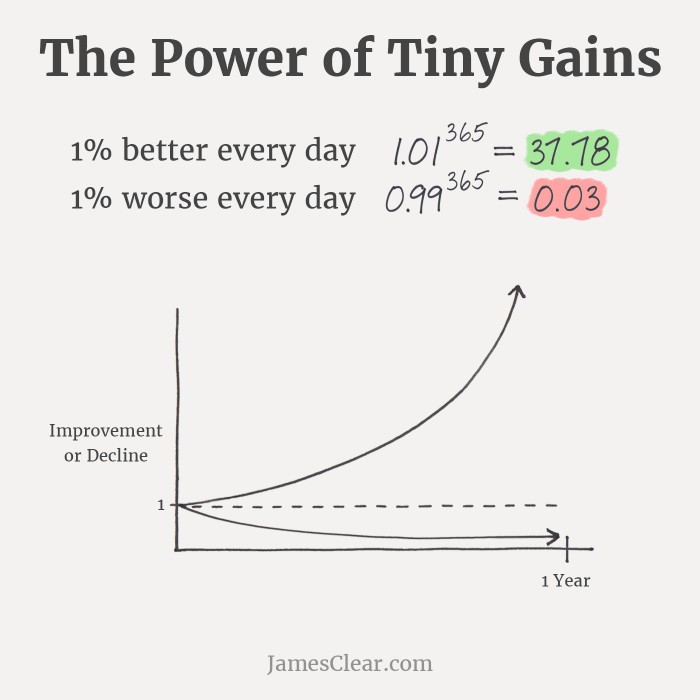
My Takeaway: This reminds me of how spiritual disciplines work. Faithfulness in small things leads to greater spiritual maturity (Luke 16:10).
‘Whoever can be trusted with very little can also be trusted with much, and whoever is dishonest with very little will also be dishonest with much. – Luke 16:10
For example, a single Bible reading session or one encouraging word to a friend might not seem life-changing. But if done every day, these small actions shape our spiritual habits and character. We form a biblical worldview and become a supportive friend to others.
2. Three Types of Habits: Goal-Driven, System-Driven, and Identity-Driven
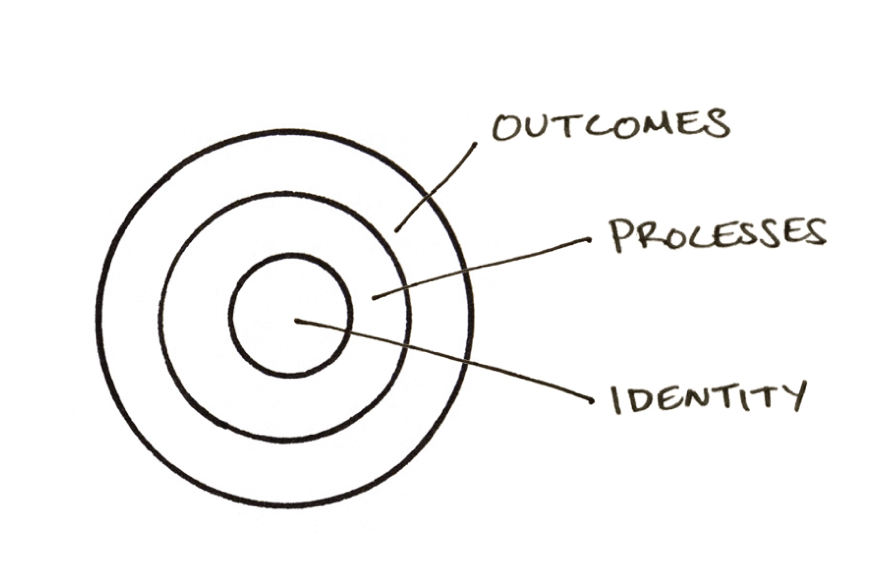
Clear categorizes habits into three levels:
✅ Goal-Driven Habits – We adopt a habit to achieve a goal (e.g., I will pray daily until I complete the 30-day prayer challenge.)
✅ System-Driven Habits – We focus on the process instead of just the goal (e.g., I will set up a daily prayer routine using a prayer journal, instead of just aiming to pray more).
✅ Identity-Driven Habits – We perform habits because they align with who we believe we are (e.g., I am a follower of Christ, therefore I naturally seek God in prayer).
3. Why Identity-Based Habits Are More Effective
Clear argues that identity-driven habits are the most effective because they align with who we believe we are rather than just what we want to achieve.
Goal-based habits often fail because once we reach the goal, we lose motivation.
For example, if your goal is to read the Bible in a year, what happens after you finish? Without an ongoing system, you may stop reading regularly.
❌ Instead of saying, “I need to complete my one-year Bible reading plan ”, (goal-based)
✅ We can reframe it as an identity-based habit: “I am a disciple of Christ, and seeking God in His Word is part of who I am.”
Biblical Example: Paul
Paul speaks of this in Philippians 3:12-14, where he describes his spiritual journey—not as a goal to be completed, but as an ongoing pursuit of his God-given identity and calling:
“Not that I have already obtained all this, or have already arrived at my goal, but I press on to take hold of that for which Christ Jesus took hold of me… I press on toward the goal to win the prize for which God has called me heavenward in Christ Jesus.” – Philippians 3:12-14
Paul isn’t just checking off a spiritual goal—he is becoming who Christ has called him to be. His pursuit of holiness and intimacy with God is not about finishing a task but about embodying an identity.
💭 Key Takeaway:
Our habits shouldn’t just be about what we want to accomplish, but about who we are becoming in Christ.
4. The Four Stages of Habit Formation
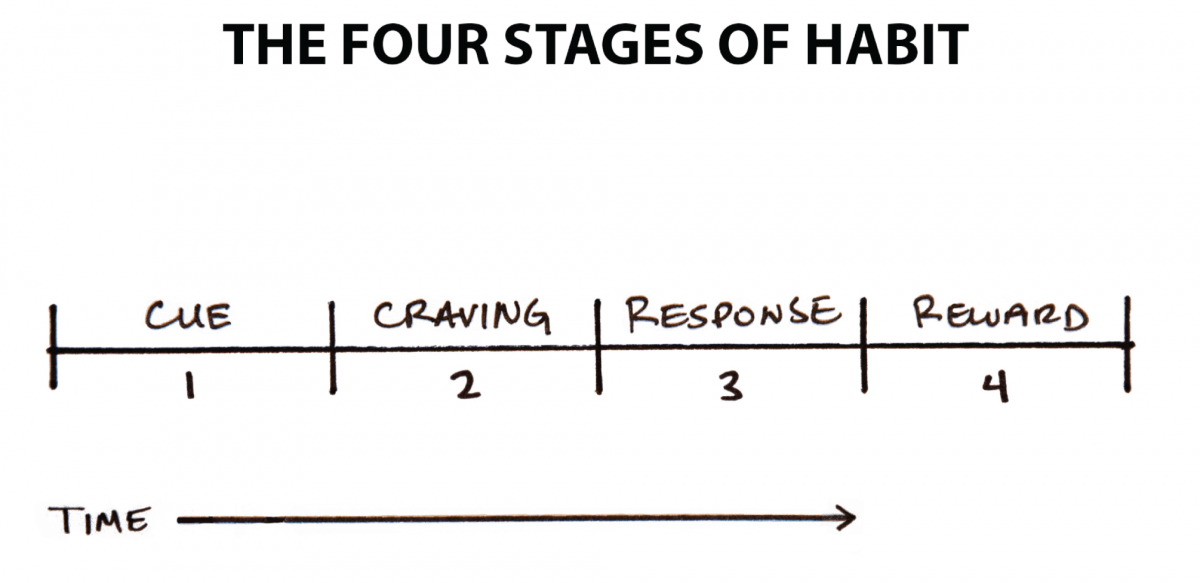
Clear explains that all habits form through a four-step cycle:
1️⃣ Cue– Something triggers an action (e.g., seeing my Bible on my desk reminds me to read it).
2️⃣ Craving – The desire for a reward (e.g., the peace that comes from reading God’s Word).
3️⃣ Response – The actual behavior (e.g., opening my Bible and reading).
4️⃣ Reward – The satisfaction that reinforces the behavior (e.g., growing spiritually).
Biblical Example of Habit Formation: Daniel
One example of habit formation can be seen in Daniel, the prophet of God who was serving under the Persian King Darius during Israel’s exile. When King Darius issued the decree against prayer, Daniel continued his habit without hesitation because it was so thoroughly established in his identity and routine.
✔Cue (Make it Obvious)
- Daniel had clear environmental cues: “His windows were open in his upper chamber toward Jerusalem” (Daniel 6:10)
- He established a consistent time-based cue: praying “three times a day”
- The physical location (upper chamber) served as a dedicated prayer space
✔Craving (Make it Attractive)
- Daniel’s motivation came from his deep connection to God and his homeland
- The practice connected him to his identity as a faithful Jew in exile
- His desire to maintain faithfulness despite living in a foreign culture created strong internal motivation
✔Response (Make it Easy)
- Daniel established a sustainable routine (three times daily)
- He had a designated location ready for prayer
- The habit was already well-established before the crisis (the decree against prayer)
- His “as he had done previously” indicates it was an automatic behavior
✔Reward (Make it Satisfying)
- Daniel experienced spiritual connection and peace
- The habit reinforced his identity as faithful to God
- His consistency brought divine protection (in the lions’ den)
- His faithfulness ultimately influenced the entire kingdom
Daniel’s example is particularly powerful because it shows how deeply ingrained habits sustain us during challenges. It reminds us of how our character are shaped by the regular habits and routines we keep during ordinary days.
5. The Four Laws of Habit Formation
James Clear outlines four key strategies for creating and sustaining habits. These principles help us not only build new habits but also make them effortless and fulfilling. When applied to our spiritual walk, these strategies can transform the way we engage with God daily.

1. Make It Obvious – Setting Clear Cues for Spiritual Habits
One of the biggest reasons habits fail is that we simply forget to do them. Life gets busy, and spiritual disciplines can take a backseat. Clear argues that the best way to make a habit stick is to make it obvious—placing physical and environmental cues that serve as reminders.
📌 Example: If you want to prioritize Bible reading, don’t leave it as a vague intention. Place your Bible in a visible spot— for example, on your desk or bedside table. Better yet, open it to the page the night before. If you use a Bible app, set a notification or make it your phone’s home screen shortcut.
📌 My Application: I make worship an automatic part of my routine by always having worship music playing in my car. Instead of just hoping to cultivate a spirit of praise, I’ve set up my environment so that the moment I start my drive, I’m drawn into worship. This small cue helps reinforce a daily habit of gratitude and reflection before I arrive at work.
2. Make It Attractive – Pairing Spiritual Habits With Joy
Habits become easier to sustain when they are enjoyable. Clear explains that we can make habits attractive by pairing them with something we already like—this increases the likelihood that we’ll stick with them.
📌 Example: If you struggle with daily devotionals, try associating them with something enjoyable—like reading your Bible with a warm cup of coffee or listening to Scripture while taking a peaceful morning walk.
📌 My Application: I have made Bible reading a non-negotiable part of my morning routine by pairing it with my first cup of coffee. I don’t check my phone or scroll through news apps in the morning. Instead, I sit with my Bible and Notability app, journaling insights as I sip my coffee. This simple pairing has turned my devotion time from a task into a treasured moment.
3. Make It Easy – Removing Barriers to Good Habits
Most of us set habits that are too ambitious, leading to frustration and failure. Instead of relying on willpower, Clear suggests removing obstacles and making the habit as easy as possible.
One way to do that is to use the 2-minute rule, especially when starting a new habit.
“When you start a new habit, it should take less than two minutes to do.” – James Clear
📌 Example: If you want to pray more consistently, but find long prayer times daunting, start small—commit to a two-minute prayer before bed or after waking up. The key is starting, not overwhelming yourself.
📌 My Application: I use habit stacking to integrate prayer, worship, and learning into my daily routine. For example, while jogging, I listen to book summaries on Shortform or worship music. This turns exercise into a time of both physical and intellectual/spiritual growth.
By embedding spiritual habits into existing activities, I make them automatic and effortless.
4. Make It Satisfying – Reinforcing Spiritual Growth
Clear explains that we are more likely to continue a habit when we see tangible results. The more we can track our progress and reflect on growth, the more fulfilling the habit becomes.
📌 Example: Keeping a prayer or gratitude journal can help you reflect on answered prayers and spiritual growth over time. Seeing how far you’ve come makes it easier to stay committed.
📌 My Application: I track my habits using a habit tracker on my Notability journal, but instead of simply ticking whether I have done a certain activity, I grade it based on the quality of the experience.
[INSERT IMAGE OF NOTABILITY HABIT TRACKER]

For example, one habit I am tracking is having a quality daily morning routine. If I start it right with prayer + Bible reading + exercise + journaling that day, I’ll give myself an ‘A’. But if I miss one component (usually my exercise) or more, I’ll grade myself a ‘B’ or a ‘C’. This simple habit makes my walk with God more intentional. It allows me to maintain the momentum of keeping the habit without getting discouraged if I do not achieve an ideal state of completion.
6. Breaking Bad Habits: The Inverse Approach

Just as good habits follow a predictable cycle—cue, craving, response, reward—bad habits are formed the same way. The difference? They reinforce behaviors that pull us away from spiritual growth, productivity, or overall well-being.
James Clear explains that if we want to eliminate a bad habit, we should reverse the four-step habit cycle to disrupt the pattern. This means:
1️⃣ Avoiding the cue that triggers the bad habit.
2️⃣ Reducing the craving by making the habit less desirable.
3️⃣ Making it harder to respond so the behavior is inconvenient.
4️⃣ Removing the reward so the habit loses its appeal.
Let’s break this down with practical strategies for overcoming common struggles.
1. Cue: Avoid the Trigger
🔹 “If you don’t see it, you’re less likely to do it.”
Most habits—good or bad—start with a cue. That’s why removing the trigger is often the easiest way to cut off the behavior before it starts.
🚨 Example: Struggling with social media distractions?
If your phone is always within arm’s reach, it’s easy to mindlessly check Instagram or YouTube when you should be praying or reading Scripture.
✅ Fix: Place your phone in another room during devotion time or use app blockers during designated prayer and study hours.
🚨 Example: Eating unhealthy snacks late at night?
If junk food is sitting in your kitchen, it becomes an automatic temptation.
✅ Fix: Don’t buy unhealthy snacks in the first place—remove them from your home entirely.
🔹 Biblical Parallel: Proverbs 4:14-15 teaches us to be proactive in avoiding temptation:
“Do not set foot on the path of the wicked or walk in the way of evildoers. Avoid it, do not travel on it; turn from it and go on your way.”
💭 Ask Yourself: What environments or objects are triggering my bad habits? How can I remove or avoid them?
2. Craving: Make the Habit Unattractive
🔹 “If something isn’t appealing, you’re less likely to desire it.”
Most bad habits persist because we associate them with pleasure or stress relief. The key is to rewire our thinking so that the habit becomes unattractive—something we no longer want to do.
🚨 Example: Scrolling endlessly on your phone?
Instead of seeing social media as a fun break, think about:
❌ How much time it wastes.
❌ How it leaves you mentally drained.
❌ How it creates a false sense of productivity.
✅ Fix: Write down the negative consequences of your bad habit and place the list somewhere visible. Over time, associating the habit with a negative outcome weakens its grip on you.
🚨 Example: Gossiping or speaking negatively about others?
We often gossip because it feels engaging or entertaining—but the Bible warns against it.
✅ Fix: Reflect on verses like Ephesians 4:29:
“Do not let any unwholesome talk come out of your mouths, but only what is helpful for building others up according to their needs.”
When you remind yourself that gossip damages relationships and dishonors God, you start losing the craving to engage in it.
💭 Ask Yourself: What are the real consequences of my bad habit? How can I make it seem less appealing?
3. Response: Increase Friction
🔹 “If something is harder to do, you’ll do it less.”
Bad habits thrive when they’re easily accessible. If it only takes one tap to open Netflix, or two steps to grab unhealthy snacks, you’re more likely to indulge.
🚨 Example: Staying up too late watching videos?
If watching Netflix is effortless, it’s easy to get stuck in the cycle of “just one more episode.”
✅ Fix: Log out of streaming accounts after each use, or delete the app from your phone. This extra step creates “friction,” making it less likely that you’ll mindlessly binge-watch.
🚨 Example: Missing morning devotions because of late-night distractions?
If you stay up scrolling on your phone, you’re less likely to wake up early for prayer.
✅ Fix: Set a hard cutoff time for electronics, and charge your phone outside your bedroom to prevent bedtime distractions.
🔹 Biblical Parallel: Jesus advises taking radical steps to remove temptation in Matthew 5:29-30:
“If your right eye causes you to stumble, gouge it out and throw it away.”
💭 Ask Yourself: How can I make my bad habit inconvenient or harder to do?
4. Reward: Remove the Satisfaction
🔹 “If a habit stops being rewarding, it stops being appealing.”
Bad habits persist because they bring instant gratification—even if they harm us in the long run. To break a habit, you need to remove the sense of reward and replace it with something better.
🚨 Example: Mindless snacking while working?
Eating junk food feels rewarding because it gives a temporary dopamine boost.
✅ Fix: Replace it with a healthier alternative, like drinking tea or chewing gum—giving your brain a similar “reward” without the negative effects.
🚨 Example: Wasting time on distractions instead of spiritual growth?
Maybe you check social media because it feels productive (learning new things, catching up with friends).
✅ Fix: Replace that behavior with something genuinely fulfilling—like reading Shortform book summaries or watching a faith-based podcast.
🔹 Biblical Parallel: Paul teaches us to replace worldly desires with godly pursuits in Colossians 3:2:
“Set your minds on things above, not on earthly things.”
💭 Ask Yourself: What new habit can I replace my bad habit with? How can I make it more rewarding than the bad habit itself?
A Biblical Critique of Atomic Habits

At this point, you might be wondering: Isn’t Christian transformation more than just behavior change?
And you’d be absolutely right.
While Atomic Habits provides powerful tools for behavioral change, it ultimately focuses on self-improvement through human effort. But Christian growth isn’t just about habit-building—it’s about grace-driven transformation.
The Bible teaches that we are not merely products of our disciplines—we are new creations in Christ (2 Corinthians 5:17). While habits play a role in shaping our lives, they are not the foundation of our transformation—God is.
Here’s where Atomic Habits falls short from a biblical perspective:
1. Habit Change vs. Heart Change
James Clear teaches that to change behavior, we must first change our identity—we must start seeing ourselves differently. While this is a powerful concept, the Bible teaches something even deeper:
✅ True identity change doesn’t come from our efforts—it comes from being made new in Christ.
“Therefore, if anyone is in Christ, the new creation has come: The old has gone, the new is here!” – 2 Corinthians 5:17
This is a radical shift from self-improvement thinking. Atomic Habits suggests that identity formation happens by gradually proving to yourself that you are a certain type of person. But in Christianity, our identity isn’t earned—it is received by grace through faith in Christ.
Of course, habits do play a role in spiritual growth. But they are fruit, not the root of transformation. The root is the work of the Holy Spirit, and without His renewing power, even the best habits cannot truly change a person’s heart.
✅ A Better Approach: Instead of focusing solely on changing behaviors, Christians should focus on being transformed from the inside out through intimacy with Christ. Habits should be an overflow of that transformation—not the cause of it.
2. The Danger of Self-Reliance
One of the strengths of Atomic Habits is its practicality—it teaches that with enough discipline and structure, we can change our lives. While this can be helpful, it also subtly encourages self-reliance rather than dependence on God.
But Philippians 2:13 reminds us:
“For it is God who works in you, both to will and to work for His good pleasure.” – Philippians 2:13
Yes, discipline is important, but who ultimately enables our growth? God does.
The problem with a self-improvement mindset is that it places the burden entirely on us. If we succeed, we might take pride in our efforts. If we fail, we might feel shame and frustration. But Christian growth isn’t about trying harder—it’s about trusting deeper.
✅ A Better Approach: Instead of trusting in our willpower, we should ask for God’s power. Rather than merely relying on systems and routines, we should seek the Holy Spirit’s guidance in shaping our lives. This doesn’t mean we don’t take action—it means we take action in dependence on God, not apart from Him.
3. The Purpose of Habits: More than Just Self-Optimization
James Clear’s framework is designed for efficiency, success, and self-improvement. His model helps people achieve goals, become more productive, and maximize their potential. But as Christians, our ultimate goal isn’t self-optimization—it’s godliness.
“Seek first the kingdom of God and His righteousness.” – Matthew 6:33
In the world’s view, habits help people become better versions of themselves—whether that means being healthier, wealthier, or more successful. But the Christian life isn’t about becoming the best version of ourselves—it’s about becoming more like Christ.
🚨 The Danger of Productivity Idolatry
Many of us are tempted to worship efficiency and success, but these things can easily become idols if we’re not careful. A hyper-focus on productivity can lead us to value output over obedience, efficiency over intimacy with God.
✅ A Better Approach: Instead of asking, “How can I build better habits for myself?” we should ask:
🔹 How can my habits draw me closer to God?
🔹 How can I structure my life around worship, not just efficiency?
🔹 Are my habits leading me toward deeper dependence on Christ, or just making me feel like I’m achieving more?
Making It Work in 2025’s Reality: Faith, Habits & Calling in a Busy World
Between the demands of hybrid work, digital distractions, career expectations, and family responsibilities, many of us struggle to stay consistent in our spiritual disciplines.
Yet, if we believe that God has called us to live purposefully, then cultivating habits that align with that calling isn’t optional—it’s essential.
At the end of the day, our habits aren’t just about routines—they shape who we are becoming. As we press on, like Paul, let’s not just build better habits, but let’s embrace the identity of a disciple pursuing Christ daily.
Ready to Transform Your Habits & Live Out Your Calling?
If you’re serious about making lasting changes in your faith, habits, and personal growth, I highly recommend getting access to a detailed summary of Atomic Habits through Shortform. This resource has personally helped me implement these concepts in my own spiritual journey.
You can access the summary and many other valuable resources by signing up through my affiliate link. The best part? It costs you nothing extra to use this link, and you’ll get comprehensive summaries of life-changing books like this one.
🔥 SPECIAL OFFER: Get 20% off an annual membership when you sign up through my affiliate link below!
Your Next Steps: Don’t Just Read—Build a System for Spiritual Growth
If you’ve ever felt like you’re meant for more, that you’re called to something greater, then the habits you build today will shape the person you become tomorrow.
🚀 Here’s one action step: Choose one small habit to start today—whether it’s:
✅ Reading one verse every morning
✅ Listening to a Christian podcast during your commute (I’d love for you to start with mine)
✅ Writing down one prayer request daily
Watching my son build his running habit has been a reminder that the small choices we make today shape the people we become tomorrow. And as Christian parents, mentors, and leaders, the habits we cultivate don’t just impact us—they influence those who come after us.
Imagine if our children, friends, or colleagues saw us consistently prioritizing prayer, Scripture, and godly living. Just as my son’s simple 1km runs transformed his mindset, our faithful daily choices—no matter how small—can shape us into people who truly ‘delight in the law of the Lord’ (Psalm 1:2).
So what small habit will you commit to today that could transform your walk with Christ in the long run? Drop a comment below and share!